50,000+
Notice of Transfer filings on the FTX docket since 2023
0
of those filings publicly disclose the seller's personal name
21 days
Standard objection window before a transfer becomes final

One of the first questions creditors ask before selling an FTX claim is whether the sale becomes public. Will family see it. Will neighbors search the docket. Will the tax office in Moscow or Minsk find a record.

The short answer is no. Your name does not appear on the public Notice of Transfer that gets filed with Kroll.

This is not a workaround or a privacy hack. It is the standard legal practice for claim transfers under Federal Rule of Bankruptcy Procedure 3001(e)(2), used across every major US bankruptcy case including FTX, Celsius, Genesis, and BlockFi.

Below, what is actually visible on the FTX docket, what is not, and why this matters for sellers in CIS jurisdictions where privacy concerns are not theoretical.

What Every Notice of Transfer Actually Says

Every Notice of Transfer filed in the FTX bankruptcy case contains a standard clause. The exact language is:

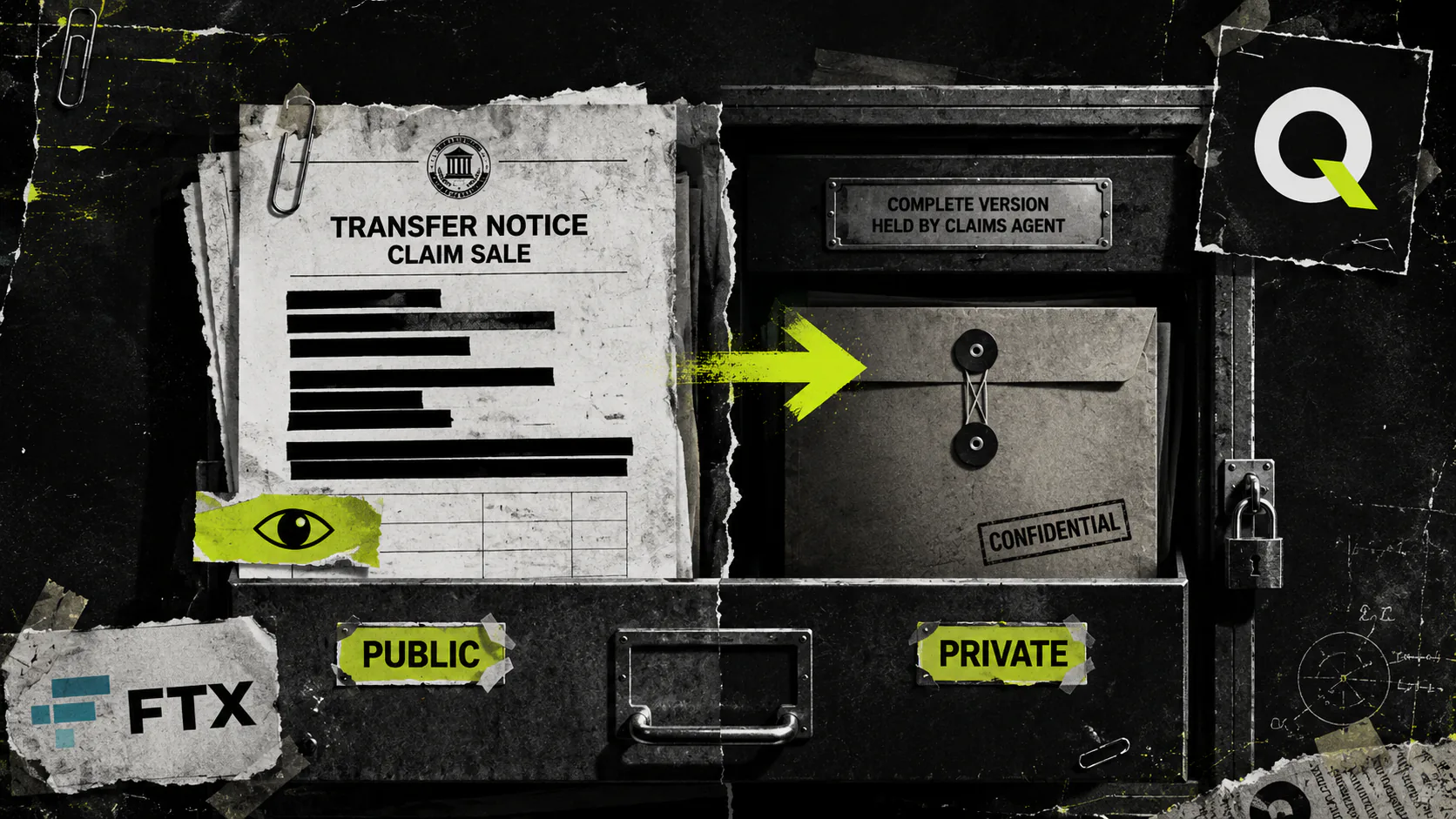
"In order to protect the identity of the Transferor/Seller, Transferee/Buyer has not disclosed the Transferor's/Seller's name in the [public filing]."

This language appears in every transfer document on the Kroll docket from major institutional buyers including Cherokee Acquisition, Oaktree, FC Cayman, SP Multi Claims Holdings, and dozens of others. It is the industry standard, not an exception.

The structure works like this. The buyer holds two documents:

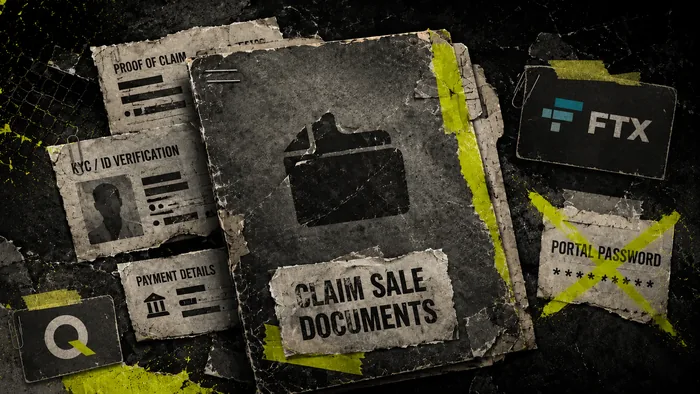
  • An unredacted Transfer of Claim, which has the seller's name
  • An executed Evidence of Transfer of Claim, which has the seller's signature

Both stay with the buyer. Kroll receives unredacted versions for internal validation purposes only. The public filing that hits the docket contains only the buyer's information, the claim ID, the claim amount, and the assignment language.

Your name as the seller does not appear in any public document.

What Is Publicly Visible on the FTX Docket

To be clear about what casual research can find, here is the breakdown.

Publicly visible:

  • Case number (22-11068, FTX Trading Ltd.)
  • Claim schedule number or claim number
  • Claim amount and class (5A, 5B, 7A)
  • Buyer name and address, usually a corporate LLC entity
  • Filing date of the Notice of Transfer
  • The standard transfer language

Not publicly visible:

  • Your personal name
  • Your residential address
  • Your KYC documents
  • The negotiated sale price between you and the buyer
  • Any NDA terms between the parties
  • Your bank or wallet information
  • Your Kroll Unique Customer Code mapped to your name

The claim schedule number is a string of digits assigned by Kroll. It does not map to a personal name in any public registry. Even if someone knew you held an FTX account, they cannot reverse-engineer your identity from a claim number.

Three Real Concerns CIS Sellers Raise

Most general bankruptcy advice does not address the specific concerns sellers in restricted jurisdictions have. Here are the three we hear most often.

1. Family or neighbors searching the docket. Not possible without your specific claim schedule number. The Kroll search interface does not accept personal names as queries. Even if a family member somehow got your claim number, all they would see is the standard transfer language and a corporate buyer entity. No personal information about you.

2. Tax authorities in your home country. Tax authorities in Russia, Belarus, Ukraine, and Kazakhstan do not have direct integration with the Delaware Bankruptcy Court or PACER. They do not monitor the FTX docket. Even if they did, they would not find your name on it.

That said, the USDT settlement into your wallet is on-chain. Tax reporting obligations depend on your local rules, not on the docket. This is a separate question from the privacy of the sale itself, and one we generally recommend discussing with a local tax advisor before signing the SAC.

3. Sanctions screening of the docket. Compliance teams at large firms do screen bankruptcy dockets for sanctioned entities. Because the buyer's name is on the docket and the seller's is not, this screening targets the buyer, not the seller. Once the SAC is executed and settlement is paid, you are out of the position entirely. The buyer takes on any forward compliance exposure tied to the claim.

This is structurally why selling resolves the sanctions exposure question rather than amplifying it.

How the SAC Structure Protects You

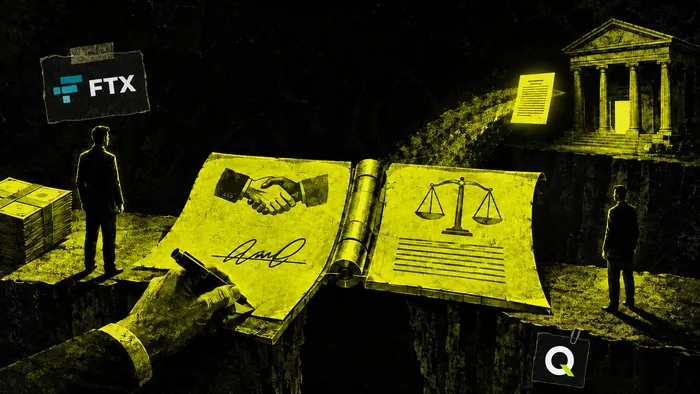
The Sale and Assignment of Claim is the underlying contract. It is a private document between you and the buyer. The SAC contains:

  • Your name and the buyer's name
  • The claim details and the sale price
  • Representations from both parties
  • Wire or USDT settlement instructions
  • An NDA clause

The SAC itself never gets filed with the court. It stays with the parties. Only the public-facing Notice of Transfer is filed, and that document is the redacted version described above.

This two-document structure is the legal mechanism that allows large institutional buyers to acquire thousands of claims while keeping individual seller identities private. The same structure protects you whether you are a $50,000 retail claim seller or a $5M institutional position.

What Happens If You Skip the SAC

Some creditors get approached for off-docket "deals" by random parties on Telegram or Discord. Pay you in crypto, you give them your Kroll login, no paperwork. This route is worse for privacy, not better.

Here is why.

When you give someone your Kroll portal access, they can:

  • See your full KYC documents
  • See your residential address
  • See the bank statements you previously submitted
  • See any communications you had with Kroll
  • Use your credentials to impersonate you

There is no NDA, no recourse, and no protection. Compare that to the SAC route where your personal name does not even appear in the transaction record.

Off-docket deals also do not transfer claim ownership. Even if someone "pays" you, the Trust still considers you the holder of record. The distribution still comes to you. The buyer has no way to compel transfer without the SAC, which means they will either harass you for further cooperation or simply walk away with your access credentials.

The formal SAC route is the legal privacy structure. The Telegram-deal route is the privacy disaster.

NDAs vs Court Records

Some sellers ask whether the NDA they sign with the buyer protects them or whether court records override it.

The two are not in conflict. The NDA is between you and the buyer. It covers what the buyer can say or share about you. It does not need to override anything in the court record because the court record never had your name in the first place.

In practice, what the NDA protects:

  • The buyer cannot tell other parties you sold them a claim
  • The buyer cannot disclose the sale price
  • The buyer cannot share your KYC documents
  • The buyer cannot reference your claim publicly

Combined with the Rule 3001(e)(2) docket structure, your sale is private at two layers: at the buyer level (NDA) and at the public level (no name on docket).

Bottom Line for CIS Sellers

If you hold an FTX claim in Russia, Belarus, Ukraine, or Kazakhstan and you have been hesitating to sell because you are worried about disclosure, the structure works in your favor.

  • Your name is not on the public docket
  • Your address is not visible to anyone
  • Tax authorities do not monitor US bankruptcy filings
  • Sanctions screening targets buyers, not sellers
  • The SAC is a private contract that never gets filed

The formal claim transfer route is one of the most privacy-protective ways to exit any financial position. It is more private than a bank wire, which is visible to your bank, more private than a brokerage account sale, which appears on year-end statements, and more private than a public crypto transfer, which is on-chain forever.

The privacy mechanism is built into the federal rules by design. You are using a structure that institutional buyers, hedge funds, and distressed debt traders use for billions of dollars in claim transfers every year. It works the same way for a $5,000 retail seller as it does for them.

Red Flags If Someone Promises "Privacy" Differently

The standard structure above is the legal privacy mechanism. Watch for parties who claim to offer "extra" privacy through non-standard structures.

No SAC at all. Anyone who tells you "we do it off-docket to keep it private" is either inexperienced or running a scam. Off-docket transfers are not transfers at all. You remain the holder of record.

Crypto-only deals with no paperwork. A real privacy structure relies on legal documents, not the absence of them. The SAC is what protects you. The lack of an SAC is what exposes you.

"We will represent you to Kroll." No legitimate buyer needs your Kroll credentials. Anyone asking for your portal login is preparing identity theft, not a claim purchase.

Promises that your name will never be on any document. Your name is on the SAC, which is between you and the buyer. That is unavoidable and that is the right structure. Anyone promising your name will be on zero documents is either lying or proposing an unenforceable arrangement.


FAQ

Does my name appear on the public FTX bankruptcy docket when I sell my claim?
No. Under standard Notice of Transfer practice on the FTX docket, the buyer files the public notice and explicitly states that the seller name is not disclosed. The exact language used in every Notice of Transfer reads: "In order to protect the identity of the Transferor/Seller, Transferee/Buyer has not disclosed the Transferor's/Seller's name in the [public filing]." Kroll holds the unredacted version internally for verification. The public docket entry does not show the seller name.
Can a family member find my FTX claim sale by searching my name?
No. The public FTX docket uses Unique Customer Codes and claim schedule numbers, not personal names. Even if someone knew you held an FTX account, they cannot map your name to a claim ID. Notice of Transfer filings on the Kroll docket protect seller identity by design.
Will tax authorities in my country see that I sold an FTX claim?
Tax authorities in Russia, Belarus, Ukraine, Kazakhstan, and other CIS jurisdictions do not have direct access to US bankruptcy court records, and they do not monitor the FTX docket. The Delaware Bankruptcy Court does not share data with foreign tax authorities. However, the receipt of funds in USDT into your wallet is on-chain. Tax reporting obligations depend on your local jurisdiction, not the bankruptcy court.
What information about my claim is publicly visible on the FTX docket?
Publicly visible: claim schedule number, claim amount, class (5A, 5B, 7A), buyer name (typically a corporate LLC), filing date, case number. Not publicly visible: your personal name, address, KYC documents, negotiated sale price, or NDA terms.
Does Kroll share my information with anyone?
Kroll holds unredacted claim documents internally for verification purposes only. They do not publish seller names on the public docket and do not share creditor information with third parties outside the bankruptcy process. A court order would be required for any disclosure. Standard practice is full confidentiality of seller identity in claim transfers.
What if my country has sanctions and someone screens the docket?
Because your name is not on the public Notice of Transfer, sanctions screening of the FTX docket cannot identify you as the seller. The buyer entity is screened by Kroll and the buyer's KYC processes. Once the SAC is executed and settlement is paid, you are out of the position. The buyer takes on any future sanctions or compliance exposure tied to the claim.

Get a binding offer on your FTX claim.

Send us your claim number, class, and jurisdiction. We respond with a firm offer within one business day. NDA is signed before any documents are shared. No obligation to accept.

Request Claim Review β†’