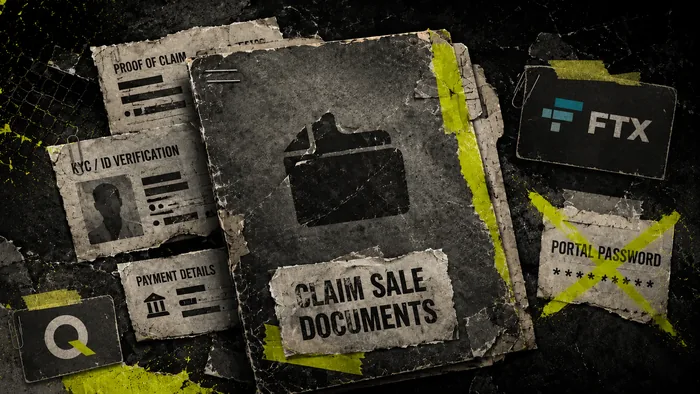
A SAC (Sale and Assignment of Claim) is the written contract in which you sell your FTX claim to a buyer: it names the claim, the parties, what is sold and what the buyer pays. The SAC itself is not filed with the court; what is filed is a separate Notice of Transfer in case 22-11068, after which Kroll records the new holder in the claims register.
How Qredax handles this
- Qredax signs a written SAC with every seller and pays when it is signed.
- Qredax files the Notice of Transfer and pays the $28 court fee.
- Part of a claim can be sold; the SAC states exactly which part.
If you have looked into selling an FTX claim, you have probably run into the term SAC. It shows up in offer emails, in buyer messages, and in the paperwork itself. For most creditors it is an unfamiliar acronym attached to the single most important document in the whole transaction.
SAC stands for Sale and Assignment of Claim. It is the contract that actually moves your FTX claim from you to a buyer. The offer, the price discussion, the settlement in USDT - all of it depends on this one agreement being drafted, signed, and processed correctly.
This guide explains what a SAC agreement is, what it contains, how it connects to the formal claim transfer process, and why a buyer like Qredax insists on using one instead of an informal arrangement.
Key facts
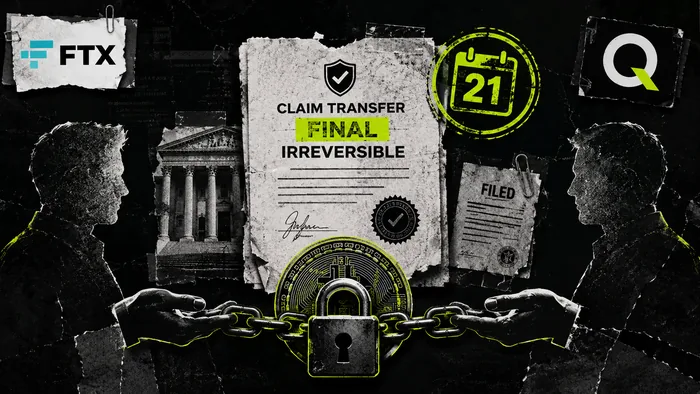
- Under Bankruptcy Rule 3001(e)(2), a seller has 21 days after the court mails notice of a filed transfer to object (federal rule, current text effective 1 December 2024).
- FTX's 17 July 2026 distribution release says buyers of claims are paid only once the transfer is on the claims register by the record date and the 21-day notice period has lapsed without objection.
- The federal court fee for filing a transfer of claim is $28 per claim transferred (Bankruptcy Court Miscellaneous Fee Schedule, effective 1 December 2023).
- The standard transfer notice, Form B 2100A (rev. 12/15), warns that a false statement can bring a fine of up to $500,000, up to five years in prison, or both.
What a SAC Agreement Is
A Sale and Assignment of Claim is a private contract between a creditor - the seller - and a buyer. It does two things at once, which is why the name has two parts.
The sale is the commercial side. You agree to give up your FTX claim, and the buyer agrees to pay you an agreed amount, settled in USDT. The assignment is the legal side. It transfers the legal right to the claim - including the right to receive every future FTX distribution tied to it - from you to the buyer.
This matters because an FTX claim is not money sitting in an account. It is a legal right against the FTX Recovery Trust: the right to be paid a share of recovered assets when distributions are made. Selling that right is not like sending a crypto transfer. It needs a contract that assigns the right itself, and that contract is the SAC.
What a SAC Agreement Contains
SAC agreements vary in length and wording between buyers, but a properly drafted one covers the same core elements. When you read one, look for each of these:
- The parties. Your legal name and the buyer's legal entity name. The buyer should be a named company, not an individual or an anonymous handle.
- The claim being sold. The FTX entity, the claim or schedule number, the class, and the claim amount. This identifies exactly which claim is moving.
- The purchase price. The amount you are paid and the settlement method - normally USDT to a wallet you control.
- Representations and warranties. Statements from you that you own the claim and have not already sold or pledged it, and statements from the buyer about its authority to purchase.
- Settlement mechanics. When payment happens relative to signing and filing, and what each side does to complete the transfer.
- A confidentiality clause. An NDA covering the price and the details of the deal.
- Further-assurances language. A clause requiring both sides to sign any additional documents needed to complete the transfer with the claims agent.
If an agreement you are handed is missing the claim identification, the price, or the parties' legal names, it is not a finished SAC. It is a draft, and it should not be signed.
How the SAC Fits Into the Claim Transfer Process
The SAC is the contract, but it is not the end of the process. A claim transfer in the FTX bankruptcy follows a defined sequence, and the SAC is step one.
“Unless the transfer was made for security, the transferee of a claim that was transferred after a proof of claim is filed must file evidence of the transfer—except for a claim based on a publicly traded note, bond, or debenture.”
Signing the SAC is not enough: the buyer must file evidence of the transfer with the court before the claim moves into its name.
Claim transfers are governed by Federal Rule of Bankruptcy Procedure 3001(e). After the SAC is signed, the buyer prepares a Notice of Transfer and files it with the court in case 22-11068. That filing tells the Recovery Trust that the claim has changed hands.
The 21-day objection period does not start when you sign the SAC. FTX's guidance says Kroll first validates the transfer and then sends notice, which starts the clock. See FTX's transfer guidelines. The payment date is a separate term of your agreement.
The SAC sits underneath all of this. The Notice of Transfer is the public-facing filing; the SAC is the private agreement that gives the buyer the right to file it. One cannot work without the other.
SAC vs an Informal "I'll Buy Your Account" Message
Some creditors are approached on Telegram or Discord with a simple pitch: get paid in crypto, no contract, no paperwork. That is not a claim sale. It is the opposite of one.
Without a SAC, nothing is assigned. The Recovery Trust still considers you the holder of record. The claim is still legally yours, which means the next distribution still comes to you - and the person who "paid" you now has a reason to pressure you for it. There is no contract, no representations, no settlement schedule, and no recourse if the other side disappears.
A SAC converts a handshake into an enforceable transfer.
Why Qredax Uses a Formal SAC
Qredax structures every purchase through a SAC for the same reason institutional claim buyers do: it is the only mechanism that produces a clean, final transfer recognised by the Recovery Trust.
For the seller, the formal route has concrete advantages. The price is fixed in writing before anything is signed. Settlement terms are defined, so you know when USDT arrives relative to signing. The confidentiality clause limits what the buyer can disclose. The agreement sets out the rights being transferred, the price, and the payment terms. Check separately which representations, cooperation duties, and indemnity or refund provisions continue after closing. Completing the transfer does not by itself mean that all of the seller's obligations under the agreement have ended.
An informal deal offers none of that. The formality is not bureaucracy; it is the protection.
What a SAC Does Not Do
It is just as useful to know the limits of the document.
“Because the statute focuses on claims—and not claimants—claims that are disallowable under § 502(d) must be disallowed no matter who holds them.”
- Circuit Judge Shwartz, In re KB Toys Inc., No. 13-1197 (3d Cir. 2013), No. 13-1197, November 15, 2013
A sale does not cleanse a claim: a ground for disallowance, such as an unreturned preference, follows the claim to the buyer and is priced in.
A SAC does not change the underlying claim. It does not raise your claim's class, fix a KYC problem with the claims agent, or resolve a dispute the Trust has raised. Those are properties of the claim itself, and the price in the SAC reflects them - a claim with an unresolved issue is priced accordingly.
Reading a SAC Before You Sign
Before you sign, slow down and check four things.
The numbers match. Claim amount, class, and claim number should match what you see in your Kroll records. The price should match the offer you were quoted.
The buyer is a named entity. You should be assigning your claim to a company with a legal name, not to a person or a pseudonym.
Settlement is defined. The agreement should state clearly when you are paid. Vague language about payment "after processing" with no timeframe is a reason to ask questions. Our guide to FTX claim sale payment timing separates payment from the transfer process.
You understand the irrevocability. Once the transfer clears the 21-day window, it is final. That is the intended outcome of a sale - but it should be a decision you make with open eyes, not a surprise.
If you intend to sell only part, check exactly which rights the SAC assigns and which you keep. The documented partial-transfer example shows why the assigned share must not be confused with the purchase price.
Check what your claim is worth
Enter your customer code - we will show an estimate that accounts for class and KYC status. Free, no obligation.
Open the calculatorFAQ
Get a firm price with a clear SAC.
Send us your claim number, class, and jurisdiction. We respond with a firm offer within one business day, and the SAC terms are on the table before you sign anything. No obligation to accept.
Sell your FTX claim