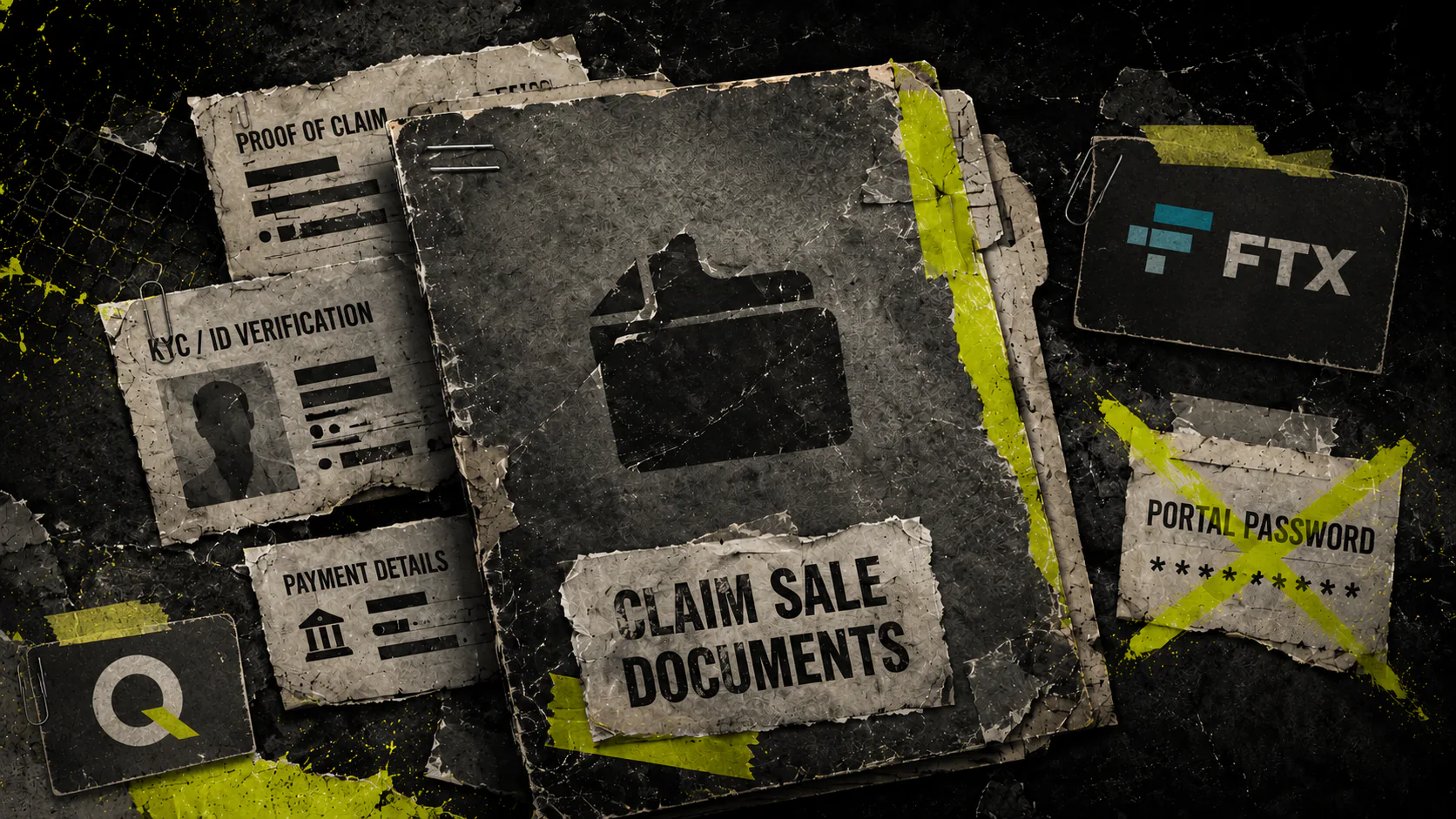
One of the first questions creditors ask about selling an FTX claim is what paperwork it takes. The worry is usually that it will be a long, intrusive process - pages of forms, notarised originals, things they no longer have.
In practice the list is short. A claim sale needs enough information to identify the claim, enough to satisfy the buyer's own compliance checks, and the documents that actually close the transaction. That is it. Most creditors already have everything they need.
This guide is a practical checklist. It groups the documents into three sets - what identifies the claim, what the buyer needs for its compliance, and what completes the sale.
Not sure what your claim represents? Start with our FTX bankruptcy claims guide.
Key facts
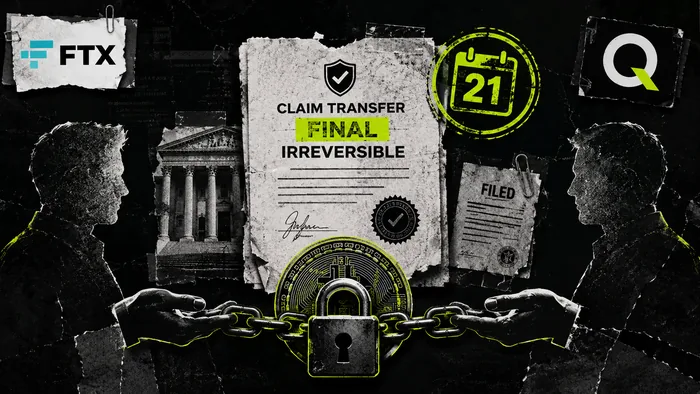
- FTX's Guidelines on Sales of Claims (updated 10 August 2025) say Kroll's notice to both sides, sent after it validates a filed transfer, starts a 21-day dispute clock.
- Under the court's 3 February 2025 order (D.I. 29464), an unverified customer claim was disallowed and expunged if KYC was not started by 1 March 2025, 4:00 p.m. ET.
- The federal court fee for filing a transfer of claim is $28 per claim transferred (Bankruptcy Court Miscellaneous Fee Schedule, effective 1 December 2023).
- The buyer signs the standard transfer notice, Form B 2100A (rev. 12/15), under penalty of perjury; a false statement can bring a fine of up to $500,000.
- The customer proof-of-claim bar date in the FTX case was 29 September 2023, 4:00 p.m. ET, according to the claims agent's case page (Kroll Restructuring Administration).
The Documents to Sell an FTX Claim, at a Glance
Before the detail, here is the whole checklist in one place. The exact list varies slightly by case, but a clean sale generally involves these items.
| Document | Purpose | Needed |
|---|---|---|
| Kroll Unique Customer Code / claim or schedule number | Identifies your claim in the FTX case | Yes |
| Scheduled claim information (class and amount) | Confirms what is being sold and at what value | Yes |
| FTX Customer Portal screenshots or records | Evidence of the claim and its status | Yes |
| Seller identity document | The buyer's KYC and compliance check | Yes |
| Signed SAC agreement | The contract that transfers the claim | Yes |
| USDT wallet address | Where settlement is paid | Yes |
Each of these is covered below. If you have your claim details and an ID document, you are most of the way there already.
What Identifies Your Claim
The first job of the paperwork is to say exactly which claim is being sold. An FTX claim is a specific legal right in a specific bankruptcy case, so the buyer needs to pin it down precisely.
The key identifier is your Kroll Unique Customer Code - the reference tied to your account in the FTX claims system - together with your claim number or schedule number. These are how Kroll, the FTX claims agent, tracks your claim. They are what links the SAC and the later Notice of Transfer to the right record.
Alongside the code, the buyer needs your scheduled claim information: the claim's class and its amount. The class - for example Class 5A, 5B, or the Class 7 Convenience class - affects the recovery and therefore the price. If you are not sure which class your claim is in, our guide to FTX claim classes explains the difference.
Finally, screenshots or records from the FTX Customer Portal (claims.ftx.com) showing your claim and its current status are normal supporting evidence. They confirm the claim exists as described and has not already been transferred.
What the Buyer Needs for Its Own Compliance
A legitimate claim buyer runs know-your-customer and anti-money-laundering checks. That is not the buyer being difficult - it is a sign you are dealing with a real, regulated counterparty rather than an anonymous one.
For these checks, the buyer typically needs a seller identity document - a passport or national ID - to confirm that the person selling the claim is the person who holds it. In some cases the buyer may also ask for basic proof that the claim is yours, which the Kroll records above already cover.
This is the point where many creditors feel cautious, and rightly so. The safeguard is straightforward: identity documents go only to a named legal entity, and only after a non-disclosure agreement is in place. A serious buyer signs an NDA before you send anything sensitive. If a counterparty wants your passport but will not name itself or sign an NDA, that is a reason to stop. Our guide on FTX claim scams covers that situation in more detail.
One thing the document list does not cover is what happens afterwards. A completed sale is the disposal of an asset, and how that is treated depends on where you live. Our guide on tax treatment of an FTX claim sale covers the general shape of the question.
What Completes the Sale
Keep the sale agreement, payment details and transfer filing separate: they serve different purposes.
“To begin the process of making changes to the account, the original owner of the account must create a ticket by reaching out to support@ftx.com.”
- Guidelines on Sales of Claims, August 10, 2025
After signing, the seller, as the original account owner, still has to contact FTX support to start the account change.
The first is the signed SAC - the Sale and Assignment of Claim. This is the contract that transfers the claim. It names both parties, identifies your claim by code and number, states the price and the settlement terms, and includes the representations and confidentiality language that protect both sides. The SAC is the document that turns an agreed offer into a real, enforceable transfer; our guide to the SAC agreement walks through it clause by clause.
The second is a wallet address for USDT settlement. Payment is normally made in USDT, so the buyer needs a wallet address you control to send the funds to. Double-check the network and the address before you provide it - a payment sent to the wrong address cannot be recalled.
A Notice of Transfer must also be filed on the public Chapter 11 docket. FTX's transfer guidelines say Kroll requests an unredacted copy when the filing is redacted, validates the transfer and then sends notice. For the distinction between public and private records, see what an FTX claim sale discloses.
What You Do NOT Need to Hand Over
This is the most important section, so it is stated plainly.
You do not need to give anyone your wallet seed phrase or private keys. The buyer needs a wallet address to send USDT to - a public address you share is harmless. A seed phrase is the key to your funds, and no part of a claim sale ever requires it.
And you do not pay any up-front fee to release a claim or a payout. In a genuine sale, money moves toward you. A "release fee" or "processing charge" demanded before payment is an advance-fee scam, not a document you owe.
What If You No Longer Have Some of It
Not every creditor has a tidy folder of records, and that is usually fine.
If you have lost track of your claim number or class but still have access to the FTX Customer Portal, you can read those details straight from your claim page. If you cannot access the portal at all, for example because the account was bought peer-to-peer, the claim can be sold only with the holder of record taking part: the guide on FTX accounts bought P2P explains how to check who that is.
If your claim has an open issue - a KYC rejection, a dispute, an expungement - you do not need to fix it before selling. Disputes and some KYC problems mainly affect the price, but a KYC-expunged claim was disallowed in full by the court's February 3, 2025 order - a buyer would be buying a disallowed claim unless it is reinstated. The right documents in that case are simply the ones that describe the claim accurately, so the buyer can quote it correctly.
Getting Your Documents Ready
If you want to move quickly, a little preparation helps. Before requesting an offer, gather three things: your Kroll Unique Customer Code and claim or schedule number, a note of your claim's class and amount, and a clear screenshot of your Kroll claim page.
That is enough for a buyer to assess the claim and return a firm price. Identity documents and the wallet address come later, once an NDA is signed and you have decided to proceed - they are part of closing, not part of getting a quote.
The paperwork for an FTX claim sale is modest, and most of it is information you already hold. The discipline that matters is not collecting more documents - it is knowing which ones a legitimate buyer actually needs.
Ready to sell your FTX claim? Request an individual offer from Qredax.
Check what your claim is worth
Enter your customer code: we will show an estimate that accounts for class and KYC status. Free, no obligation.
Open the calculator