Key facts
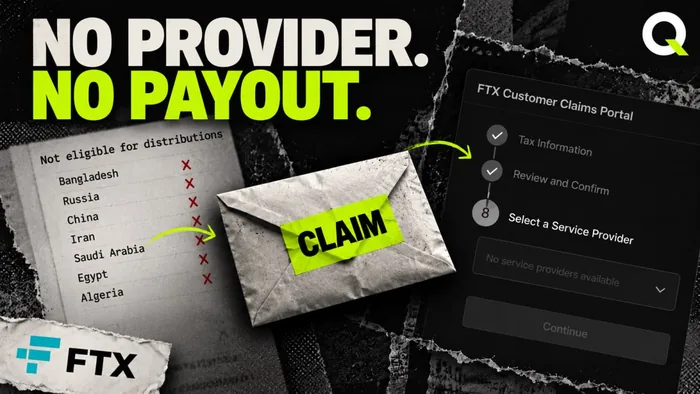
- As of 1 October 2026, FTX's Distribution Service Provider page lists Russia as not eligible for distributions; residents cannot select a provider in the FTX Customer Portal (FTX DSP page, updated 2 Oct 2026).
- FTX says a holder who does not onboard with a distribution service provider within six months of the 31 July 2026 distribution date may forfeit distributions (Distributions Dashboard FAQs, updated 13 Sept 2026).
- On 3 November 2025 the Trust withdrew its restricted-jurisdiction motion without prejudice, citing reasons the Court gave at the 23 October 2025 hearing (Notice of Withdrawal, D.I. 33439).
- That motion, filed 2 July 2025, listed 49 jurisdictions, Russia among them, worth about 5% of projected allowed-claim value (Motion, D.I. 31148; Exhibit B).
- Customer claims are valued at crypto prices as of 10:00 a.m. ET on 11 November 2022, the time used for the court-approved conversion table (Lu declaration, D.I. 5204; order, D.I. 7090).
The short answer
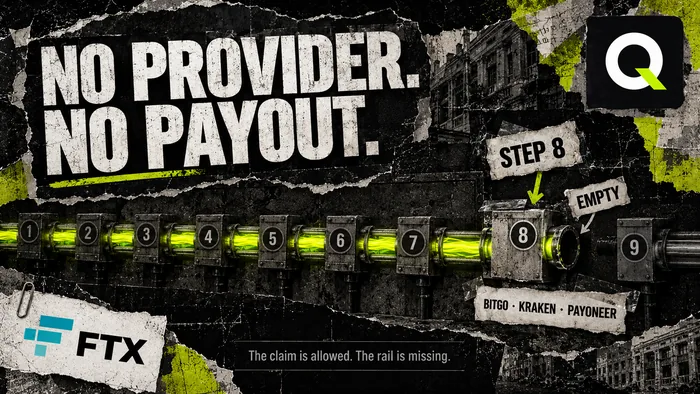
- Russian passport + living in Russia + Russian bank: you cannot receive the payout. The channel breaks at Step 8 (choosing a Distribution Service Provider).
- Russian passport + genuine residence abroad + foreign bank account: you can receive it. You will need to update your residence with FTX and clear enhanced due diligence.
- KYC verified but the provider declined onboarding: escalate and wait for new providers - or sell the claim.
The rest of this guide walks you through it, step by step.
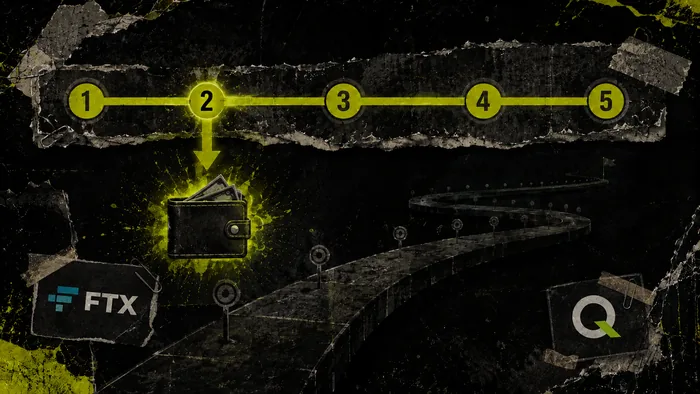
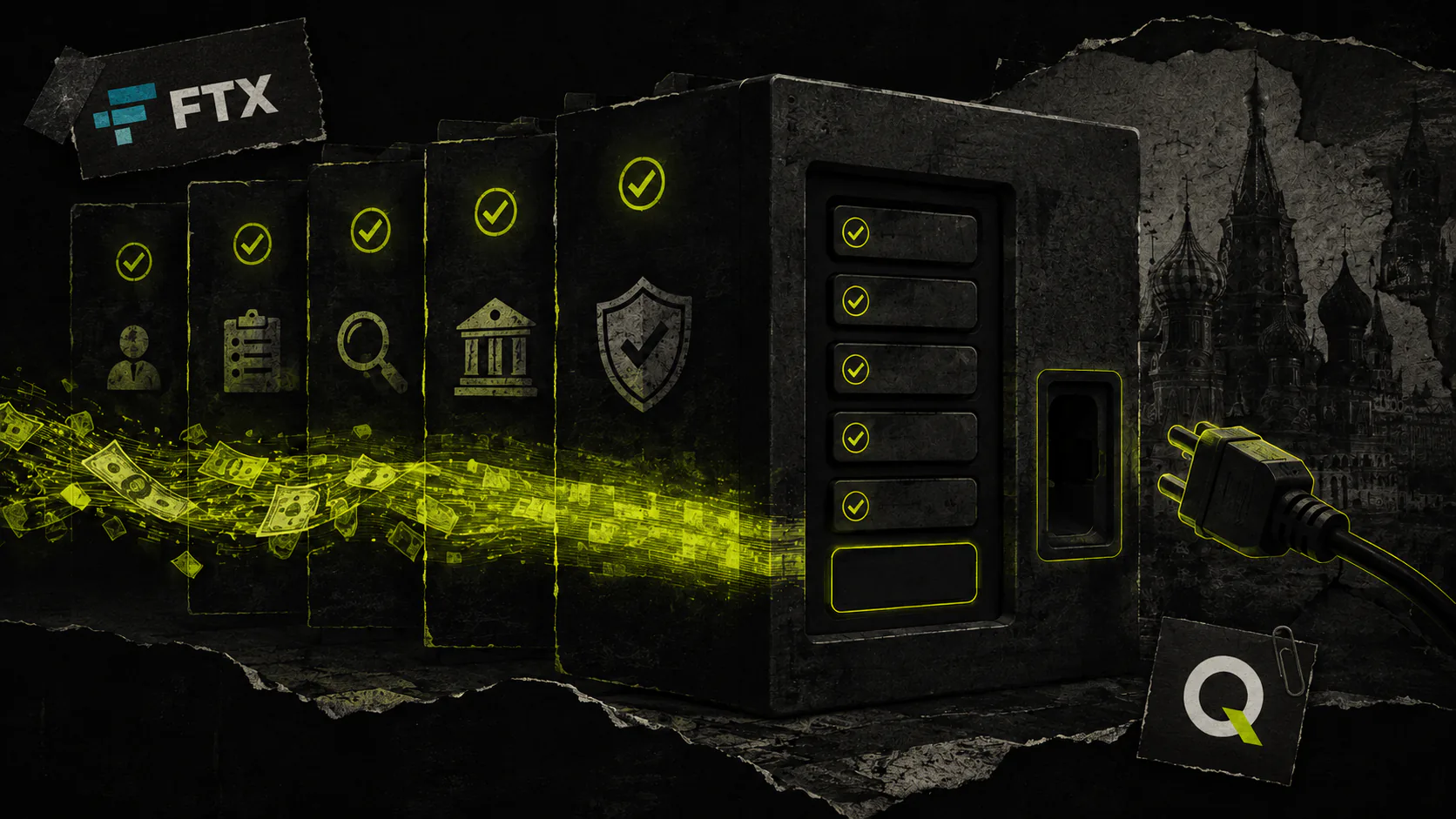
How the official channel works: the money's path in five steps
If your money is stuck on FTX and you are in Russia, there is nothing to withdraw from - the exchange is gone. What you are waiting on is a Recovery Trust distribution, and to get one you have to walk a chain inside the claims.ftx.com portal. For a Russian resident that chain breaks at a specific point. Here is where it breaks, and what you can do about it.
Steps 1-3. Account and KYC
Portal registration, claim ownership confirmation, identity verification. Russian and Belarusian passports routinely get routed into enhanced due diligence and rejected on first submission - a known problem, and a solvable one. A Russian passport by itself is not a dead end: Verified status is reachable. How the escalation works, what source-of-funds documents get requested and how long it takes - covered in our separate guide on KYC problems for CIS creditors.
Step 7. Tax form
Non-US persons file a W-8BEN directly in the portal. No technical obstacle for Russians here.
Step 8. Choosing a payout provider (BitGo, Kraken, Payoneer) - this is where it breaks
Distributions run through three providers: BitGo, Kraken, and Payoneer. Per FTX's Distribution Service Provider page, as of October 1, 2026 Russia is still not eligible for distributions, and Russian residents cannot select any of them - the option is simply unavailable for the jurisdiction in the portal. And even where the option exists, the final onboarding decision is made by the provider itself, on its side.
Payoneer suspended service for customers in Russia and Belarus back in 2022. BitGo and Kraken are US-regulated companies with their own sanctions compliance. For a Russian resident the result is the same with all three.
The rails: where the money could even land
Even a hypothetically willing provider runs into banking mechanics: a USD wire into a Russian bank does not clear the correspondent chain - US correspondent banks do not process such payments. A crypto payout via BitGo or Kraken requires passing their onboarding, which is closed to Russian residents. The full tranche schedule, amounts and classes are in our FTX payout schedule for 2026.
Can you sell if your country has no FTX payout provider? Yes. A claim is a right to distributions from the FTX Recovery Trust, and it can be sold: the country restriction follows the holder, not the claim, and a transfer under Bankruptcy Rule 3001(e) does not depend on the seller's country. The exception is when sanctions prohibit the deal. Qredax buys such claims: here is how the sale works, step by step. More in the guide to countries without a payout provider.
It is not a ban on paying. It is missing delivery
There is no "do not pay Russians" clause in the FTX reorganization plan. More than that: in summer 2025 the Trust sought special treatment for a long list of "restricted jurisdictions" - and withdrew that motion without prejudice on November 3, 2025, for the reasons the Court set out at the October 23, 2025 hearing (D.I. 33439). What was on the list, what "withdrawn without prejudice" means and what could trigger a refiling - in our separate breakdown of FTX restricted jurisdictions.
“PLEASE TAKE NOTICE that for the reasons set forth by the Court on the record at the hearing on October 23, 2025, the FTX Recovery Trust hereby files this notice withdrawing the Motion … without prejudice.”
- The FTX Recovery Trust's Notice of Withdrawal of Motion to Implement the Restricted Jurisdiction Procedures in Potentially Restricted Foreign Jurisdictions, D.I. 33439, November 3, 2025
The Trust withdrew the motion for reasons the court gave at the 23 October 2025 hearing; because it was without prejudice, it can be refiled.
Legally, a Russian resident's claim is no different from a German resident's claim. The difference is infrastructure: providers must run sanctions compliance, their correspondent banks do not process USD payments into Russia, and the providers themselves do not onboard Russian residents. The money is in the Trust. The delivery channel is not there.
Important: being unable to select a provider does not by itself cancel the claim. What is blocked is the delivery of the payout. But FTX has also warned that a holder who does not onboard with a distribution provider within six months of July 31, 2026 may forfeit the right to distributions on that claim - see the deadline below. What changed in the six months after the restricted jurisdictions withdrawal, and why the operational bottlenecks did not move - see here.
What those distributions add up to: Class 5A - the main class for Russian holders - has received a cumulative 105% so far, according to FTX's July 2026 announcement. The Trust has not announced a final percentage. Keep one thing in mind: those percentages are measured against the dollar value of the assets on November 11, 2022, not today's crypto price - so even 105% can be worth noticeably less than the coins would fetch now. The class-by-class breakdown is in our FTX claim classes guide.
Three profiles: where exactly it breaks and what works
Profile 1. Russian passport, living in Russia, Russian bank
Stopped at Step 8. You can pass KYC and file the tax form, but you cannot select a provider - the jurisdiction is closed with all three. What remains: wait for the infrastructure to change (FTX Support states the provider list may grow - no specifics, no timeline) or exit the wait by selling the claim.
Profile 2. Russian passport, genuine residence abroad, foreign account
The channel is open. The sequence: update your country of residence with FTX (an email procedure, described in the restricted jurisdictions article: how to update your residence), clear enhanced due diligence (two to four weeks, based on relocated creditors' experience), select a provider for the new jurisdiction, and pass its onboarding.
One thing is non-negotiable: the residence must be real. Declaring an address you do not live at is a misrepresentation in a US federal bankruptcy process, and the risk lands on the claim itself. Do not do it.
Profile 3. KYC verified, but the provider declined
Happens even with a "clean" jurisdiction: each provider runs its own AML and owes no explanation for a decline. Working escalation: portal support and the provider's direct contact (for BitGo - ftxcreditors@bitgo.com). If the decline is final, you are at the same point as Profile 1: wait or sell.
What the fifth distribution means for Russian residents
Record date was June 16, 2026; payments began July 31. If by June 16 you did not have Verified status and a connected provider, you were not in this tranche. Later distributions remain possible, subject to the onboarding deadline below.
“Eligible creditors should expect to receive funds from their selected distribution service provider (a "Distribution Service Provider"), either BitGo, Kraken or Payoneer, within 1 to 3 business days from July 31, 2026.”
- FTX Announces Fifth Distribution of Approximately $900 Million to Creditors on July 31, 2026, July 17, 2026
Payouts arrive only through one of these providers, so creditors who cannot select one, such as Russian residents, have their payout deferred.
Six-month onboarding deadline. FTX states that the holder of an allowed claim who does not successfully onboard with a distribution service provider within six months of the July 31, 2026 distribution date may forfeit the right to receive distributions on that claim. That window closes around January 31, 2027. FTX has not said how this applies to holders who cannot select any provider.
If you are selling or transferring the claim: the distribution goes to the new holder only under two conditions - the transfer is reflected on the official claims register as of the record date, and the 21-day notice period has elapsed without objection. All dates and rules are in the FTX fifth distribution schedule.
How to get your money back from FTX in Russia: three options
First - wait. Fits if you believe a Russia-capable provider will appear or the sanctions framework will shift. There are no signs on the horizon and nobody quotes timelines, and waiting has costs: time, market risk and the six-month onboarding deadline above.
Second - genuine relocation, or you already live abroad. Then Profile 2 works: residence, enhanced due diligence, provider. The longest path, but fully official.
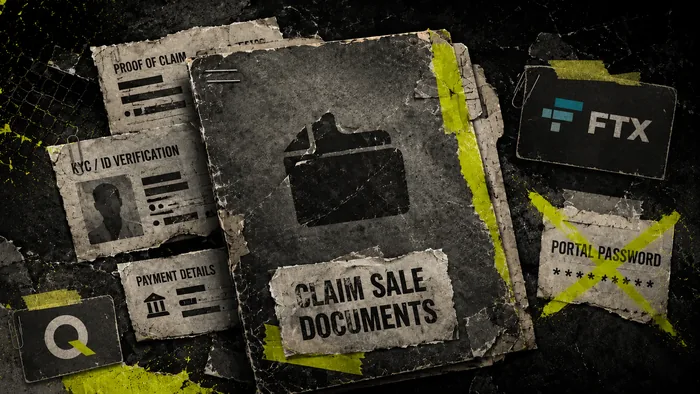
Third - sell the claim. Money now, in USDT, with no providers and no USD corridors; your KYC status is priced in. How a Rule 3001(e) sale works, what documents are needed and how settlement happens - in our selling guide on how to sell an FTX claim from Russia. What your claim is worth - check by code in one minute with the calculator.
Check what your claim is worth
Enter your customer code: we will show an estimate that accounts for class and KYC status. Free, no obligation.
Open the calculatorFAQ
Get an offer for your FTX claim.
Send us your claim details, and a firm offer follows within one business day. No obligation to accept.
Sell your FTX claim