Kazakhstan is not on FTX's list of jurisdictions that are not eligible for distributions (as of October 1, 2026), so creditors there can receive distributions through a provider; the provider makes the final decision during onboarding. Most coverage of FTX claims in the post-Soviet space focuses on Russia, Belarus and Ukraine. That leaves a real question for everyone else: if you are an FTX creditor living in Kazakhstan, Armenia, Kyrgyzstan, Uzbekistan, Moldova, Georgia or Azerbaijan, can you actually sell your claim - and does your country change anything?
The short answer is yes, you can sell, and yes, jurisdiction matters - but usually less than people fear. A claim sale is a contract assignment, not a transfer that depends on where you happen to bank. What your country affects is the practical path: how identity checks run, how an offer is priced, and how settlement reaches you.
This guide is about the CIS states other than Russia, Belarus and Ukraine. If your claim is in one of those three, the mechanics are covered separately in our guide to selling an FTX claim from Russia, Belarus or Ukraine. Here we focus on eligibility and jurisdiction for the rest of the region.
Key facts
- As of 1 October 2026, FTX's DSP page lists Moldova, Russia, Belarus and Ukraine as not eligible for distributions; Kazakhstan, Armenia, Kyrgyzstan, Uzbekistan, Georgia and Azerbaijan are not listed (FTX DSP page).
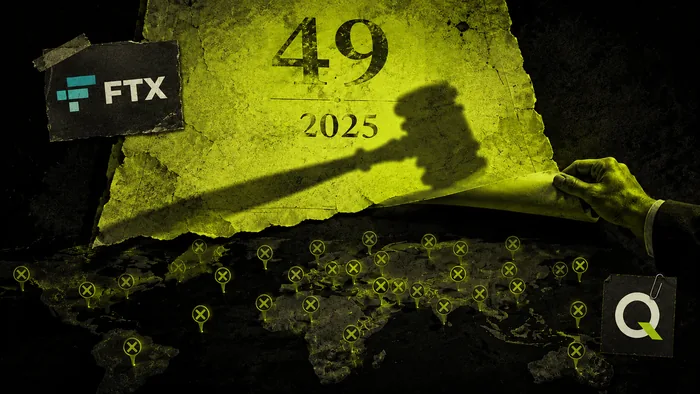
- The Trust's July 2025 motion listed 49 jurisdictions; its CIS entries were Russia, Belarus, Ukraine and Moldova, not Kazakhstan (D.I. 31148; Exhibit B).
- The Trust withdrew that motion without prejudice on 3 November 2025, so it can be refiled with notice (Notice of Withdrawal, D.I. 33439).
- Under Bankruptcy Rule 3001(e)(2), a seller has 21 days after the clerk mails notice of a filed transfer to object (Fed. R. Bankr. P. 3001).
- Customer claims are valued at crypto prices as of 10:00 a.m. ET on 11 November 2022, the time used for the court-approved conversion table (Lu declaration, D.I. 5204; order, D.I. 7090).
Yes - Creditors in CIS Countries Can Sell an FTX Claim
An FTX claim is a legal right against the FTX Recovery Trust: the right to receive a share of recovered assets when distributions are made. That right is property, and like other property it can be sold and assigned to a buyer.
“Unless the transfer was made for security, the transferee of a claim that was transferred after a proof of claim is filed must file evidence of the transfer—except for a claim based on a publicly traded note, bond, or debenture.”
The rule says nothing about the seller's country: the buyer files evidence of the transfer with the bankruptcy court.
Nothing in the FTX bankruptcy bars a creditor in Kazakhstan, Armenia, Kyrgyzstan, Uzbekistan, Moldova, Georgia or Azerbaijan from selling. Claim transfers are governed by Federal Rule of Bankruptcy Procedure 3001(e), a US procedural rule that turns on the contract and the filing - not on the seller's nationality or residence. A creditor in Almaty assigns a claim using the same mechanism as a creditor in New York.
What differs between countries is the friction around that mechanism. Some CIS creditors finished KYC in the FTX portal without trouble; others stalled on document formats, address verification, or banking access. The claim is still sellable in every one of those situations - the friction shows up in pricing and process, not in eligibility.
How to Sell an FTX Claim From Kazakhstan
For a creditor in Kazakhstan, the path looks the same as anywhere else in the region. You start by sending a buyer three pieces of information: the claim number, the claim class, and your jurisdiction. From those, a buyer like Qredax can quote a firm offer.
“A Notice of Transfer of Claim needs to be filed on the public Chapter 11 docket.”
- Guidelines on Sales of Claims, August 10, 2025
The transfer notice goes on the court's public docket; Kroll, the claims agent, then validates it and notifies both sides.
If you accept, the sale is documented through a SAC - a Sale and Assignment of Claim agreement. That contract identifies the claim, fixes the price, and assigns the claim and all its future distribution rights to the buyer. The buyer then files a Notice of Transfer with the court; once Kroll, the FTX claims agent, validates the transfer and sends notice, a 21-day objection window runs before the transfer becomes final.
Being based in Kazakhstan does not add a step to that sequence. It mainly affects two things: settlement, which Qredax makes in the currency you choose (crypto to a wallet you control, or a bank transfer), and verification, where a buyer reviews your Kroll records and identity documents as part of normal diligence. Neither is unusual, and neither depends on a Kazakhstani bank cooperating with a US estate.
Armenia, Kyrgyzstan, Uzbekistan, Moldova and the Rest
The same logic extends across the region. A creditor in Yerevan, Bishkek, Tashkent or Chisinau holds the same kind of asset and can sell it the same way.
There are local differences worth being honest about. Crypto regulation, banking access, and document conventions are not identical across Armenia, Kyrgyzstan, Uzbekistan, Moldova, Georgia and Azerbaijan. Those differences can change how smoothly KYC in the FTX portal goes and how a buyer prices the claim. They do not change the core point: the claim is yours, it is property, and it can be assigned under Rule 3001(e).
How Jurisdiction Affects the Offer
Jurisdiction does feed into pricing, but indirectly. A buyer is not pricing your country - it is pricing the risk and effort attached to your specific claim, and your country is one input among several.
The main drivers of an offer are the claim class and the claim's condition. A clean Class 5A claim with completed verification sits at the top of the range. A claim where KYC with the FTX Recovery Trust or its KYC vendors stalled, or where the account history is harder to confirm, carries more work and more risk for the buyer, and the offer reflects that. Jurisdiction matters mostly through this channel: it influences how likely verification is to be clean.
| Claim situation | Typical Qredax offer (% of face value) |
|---|---|
| Clean Class 5A, verification complete | up to 95% |
| Class 7 Convenience claim | up to 70% |
| KYC stuck or unverified in the FTX portal | Case-by-case |
These are Qredax offer ranges - the percentage of face value the seller receives - not market averages. For most creditors in Kazakhstan, Armenia, Kyrgyzstan, Uzbekistan and Moldova whose claims are clean, the offer lands in the upper bands. The lowest band is tied to a specific procedural flag, discussed next.
The Restricted-Jurisdictions Motion Was Withdrawn
In 2025 the FTX Recovery Trust filed a motion that would have let it withhold or restrict distributions to creditors in 49 named jurisdictions, a list whose CIS entries were Russia, Belarus, Ukraine and Moldova - Kazakhstan was not on it. That motion drew wide attention across the CIS, because for a while it looked like geography alone could block a payout.
That motion was withdrawn on November 3, 2025, and the withdrawal was without prejudice. Without prejudice means the Trust did not give up the right to raise the issue again later in some form - it stepped back from this particular motion rather than closing the question permanently.
For creditors in the CIS states covered here, the practical takeaway is twofold. First, the motion is withdrawn - but as of October 1, 2026 FTX's DSP page still lists Moldova, along with Russia, Belarus and Ukraine, as not eligible for distributions. Second, "without prejudice" is a reason to follow the docket rather than assume the matter is closed forever. We track the aftermath in our follow-up, the restricted-jurisdictions motion six months on. For a seller, this uncertainty is exactly what a clean sale removes - once your claim is assigned and the transfer is final, future procedural shifts are the buyer's exposure, not yours.
Why the SAC Route Fits CIS Creditors
For a creditor in the CIS, the SAC route has a specific appeal beyond simply documenting the deal. It converts an uncertain, long-dated position into a fixed amount settled now.
Waiting for the Trust means waiting for distributions paid on petition-date value - the value of assets as of November 11, 2022 - across multiple tranches, while depending on KYC in the FTX portal, banking channels, and a procedural environment that the restricted-jurisdictions episode showed can change. A SAC sale replaces all of that with one contract, one price, and one USDT settlement to a wallet you control.
The formality is the protection. The SAC fixes the price in writing before you sign, defines when settlement happens, and includes confidentiality terms. Once the Notice of Transfer clears its objection window, you are fully out of the position. For a creditor in Kazakhstan or elsewhere in the region, that finality is often worth more than holding on for a marginally higher number that depends on conditions outside their control.
What a CIS Creditor Should Do Next
If you hold an FTX claim and live in Kazakhstan, Armenia, Kyrgyzstan, Uzbekistan, Moldova, Georgia or Azerbaijan, the first step costs nothing and commits you to nothing.
Gather your claim number and class from your Kroll records and note your jurisdiction. You can use those details to request an offer from Qredax. You do not need to have finished every step in the FTX portal before asking - an unverified or KYC-stuck claim can still be assessed; it is priced differently, and the agreement states any conditions the sale depends on.
From there, review the SAC carefully before signing: check that the claim amount, class and number match your records, that the buyer is a named legal entity, and that settlement timing is clearly defined. A claim sale from the CIS is a normal, well-understood transaction. Your country shapes the details - it does not stand in the way.
Check what your claim is worth
Enter your customer code: we will show an estimate that accounts for class and KYC status. Free, no obligation.
Open the calculatorFAQ
Find out what your CIS claim is worth.
Send us your claim number, class, and jurisdiction - Kazakhstan, Armenia, Kyrgyzstan, Uzbekistan, Moldova or elsewhere in the CIS. We respond with a firm offer within one business day. An NDA comes before any documents change hands, and there is no obligation to accept.
Sell your FTX claim