Key facts
Items 1-4 describe the liquidators' second interim report filed on December 2, 2025. They are historical figures, not today's totals.
- 43,202 FTX.com customers elected into the Bahamas process. Claims for 42,778 of them (99%) had been adjudicated, with an agreed value of $787.2 million. [10, PDF p. 10]
- Approximately $444.1 million had been paid to customers. 28,755 Convenience Class customers had been paid in full; the class's final payment amounted to approximately 120% of adjudicated value. [10, PDF pp. 10-12]
- Eligible Non-Convenience Class customers had received approximately 78% of adjudicated value in aggregate. [10, PDF p. 12]
- 6,251 claims worth $315.3 million remained in adjudication, KYC or tax verification. Another 2,187 claims worth $31.6 million had been adjudicated and KYC-verified but remained unpaid because of residence restrictions. [10, PDF p. 10]
- The May 27, 2026 notice required written confirmation of a transfer before the record date for it to count for that distribution. [8]
- PwC's list of jurisdictions where it cannot pay had 46 entries when checked on November 12, 2026, including all of Ukraine and Rwanda. The U.S. FTX list as of October 30, 2026 has 43 entries and includes only five regions of Ukraine. [9] [14]
FTX Bahamas / PwC in numbers
| What | Number or date | Source |
|---|---|---|
| FTX.com customers who elected into the Bahamas process | 43,202 | [10] JOLs' Second Interim Report, December 2, 2025 |
| Claims adjudicated | 42,778 (99%), with an agreed value of $787.2 million | [10] JOLs' Second Interim Report, December 2, 2025 |
| Paid to customers | Approximately $444.1 million | [10] JOLs' Second Interim Report, December 2, 2025 |
| Convenience Class final payment | approximately 120% of adjudicated value | [10] JOLs' Second Interim Report, December 2, 2025 |
| Non-Convenience Class, received in aggregate | approximately 78% of adjudicated value | [10] JOLs' Second Interim Report, December 2, 2025 |
| Adjudicated, KYC-verified claims unpaid because of residence restrictions | 2,187 claims, $31.6 million | [10] JOLs' Second Interim Report, December 2, 2025 |
| Convenience Class threshold | $50,000 or less before interest | [6] Convenience Class FAQs |
| Time to complete KYC after the invitation | 30 days | [2] PwC: FTX Digital Markets FAQs |
| Bahamas election deadline | 4:00 p.m. New York time on August 16, 2024 | [13] Bahamas Election Process Overview |
| Record date in the May 27, 2026 notice | June 16, 2026 | [8] Distribution Record Date notice, May 27, 2026 |
| PwC list of jurisdictions where payments cannot be made | 46 (checked on November 12, 2026) | [9] Potentially Restricted Foreign Jurisdictions |
| U.S. jurisdictions where a payout provider cannot be selected | 43 (FTX list as of October 30, 2026) | [14] FTX Support: General Information on Distribution Service Providers |
Who runs FTX Bahamas, and where does PwC fit?
Short answer: FTX Bahamas is the official liquidation of FTX Digital Markets Ltd., run by three court-appointed liquidators, two of them from PwC, under the Supreme Court of The Bahamas.
FTX Bahamas is the commonly used name for the official liquidation of FTX Digital Markets Ltd., a separate FTX group entity. Its case is supervised by the Supreme Court of The Bahamas. It differs from the Delaware Chapter 11 cases: FTX Digital Markets is not one of the debtors in those Chapter 11 proceedings. [1]
The court appointed three Joint Official Liquidators (JOLs): Brian Simms KC of Lennox Paton, Kevin Cambridge of PwC Bahamas and Peter Greaves of PwC Hong Kong. They became official liquidators on November 10, 2023, after the provisional liquidation. "PwC liquidator" is a convenient shorthand, but the process is run by these court-appointed professionals. [1]
The liquidators recover and realize assets, adjudicate claims and arrange distributions. Identity verification, claim valuation and payment are separate stages. [2]
Why are there two processes for the same exchange?
Short answer: FTX Digital Markets and the U.S. debtors run separate proceedings but coordinate them under a global settlement; each claim still has to meet its own payment conditions.
Separate proceedings followed FTX's collapse. FTX Digital Markets and the U.S. debtors entered into a Global Settlement Agreement, announced on December 19, 2023. Under it, they pool assets and coordinate their work, with the aim that FTX.com customers in both proceedings receive substantially identical relative distributions at substantially identical times. It does not guarantee that individual customers will be paid on the same day: each claim must meet its own conditions. [3]
| Issue | United States | Bahamas |
|---|---|---|
| Proceedings | Chapter 11 of FTX Trading Ltd. and affiliated debtors | Official liquidation of FTX Digital Markets Ltd. |
| Court | U.S. Bankruptcy Court in Delaware | Supreme Court of The Bahamas |
| Portal | FTX Customer Claims Portal | FTX Digital Claim Portal |
| Claim transfer | Notice of Transfer filed with the court and recorded by Kroll | Transfer Notice Form processed by the FTX Digital team |
| Public transfer record | On the docket in case 22-11068 | Not described in the PwC guide; the liquidators confirm transfers in writing |
| Partial sale | Possible, with the assigned share and terms documented | The guide describes full ownership transfers only |
| Transfer filing fee | $28 per claim transferred | Not stated in the PwC guide |
| Recognition for a distribution | Recorded by Kroll by the record date, with the 21-day notice period passed without objection | Confirmed in writing by the liquidators before the record date |
| Restricted-country lists | 43, FTX list as of October 30, 2026 | 46, PwC list checked on November 12, 2026 |
"US / Kroll" is a useful route label; Kroll is not FTX Digital Markets' liquidator. Comparison sources: [1], [5], [8], [14], [15], [16], [17]. For partial sales in the U.S. process, see the guide to selling part of an FTX claim. A topic's absence from the PwC guide does not prove that no public records or other costs exist.
In the U.S. process, the 21-day period starts with the notice Kroll sends to the parties after validating a transfer, not with contract signing. This is a U.S. procedure; PwC transfers follow their own rules. [17]
Can you now switch from the Bahamas to the U.S. process?
Short answer: No: the election closed on August 16, 2024, and PwC's election guide says it is no longer possible to switch processes.
FTX.com customers could elect into the Bahamas process until 4:00 p.m. New York time on August 16, 2024. The election guide says that claims then continue in the selected process and that it is no longer possible to switch processes. The same claim cannot be processed in both. Customers who made no election stayed in the U.S. Chapter 11 process. If your election is unclear, check its confirmation and the relevant correspondence first. [13, PDF pp. 5-6] [3]
Where to check a Bahamas claim and what Customer Code means
Short answer: Check a Bahamas claim in the FTX Digital Claim Portal linked from PwC's case website; the Customer Code is a U.S. identifier and does not confirm the PwC amount.
Start at PwC's official FTX Digital Markets case website and follow its link to the FTX Digital Claim Portal. Check your status and the liquidators' messages there. [1] [13]
A Unique Customer Code and a PwC claim reference are different identifiers. The Customer Code was created for the U.S. Chapter 11 cases to replace identifying customer information in certain public records. It is available under My Account in the FTX Customer Claims Portal (claims.ftx.com) or in Kroll correspondence. Having that code does not by itself establish your current process. [11]
A Bahamas customer's code may help locate a record in U.S. data, but it does not confirm the current amount payable by PwC. No result in the calculator does not prove that the Bahamas claim does not exist. For an initial Qredax inquiry, provide the code or reference you know. If neither is available, describe your situation. An assessment request does not replace an official claim filing or a response to the liquidators.
How claim processing works
Short answer: A Bahamas claim passes six portal stages from registration to settlement; adjudication sets the amount, and identity verification is a separate review with its own statuses.
The portal stages are registration, Electronic Proof of Debt, Claim Adjudication, Identity Verification, Payment Instruction Submission and Claim Settlement. New submissions under the process described in the guide are closed; existing claimants continue through the following stages. [4, PDF pp. 2-8]
Claim Adjudication establishes the claim amount after review. View Current Balance shows the current and original balances and the adjustment history. Distinguish a final adjudication notice from the amount originally submitted. Current Balance can still change after further adjudication updates; it does not by itself confirm final payment eligibility. [4, PDF p. 10]
Identity Verification is a separate review of the customer's identity and information.
| Status | Meaning |
|---|---|
| Not Available | You have not yet been invited |
| Available | You can start verification |
| In Progress | Your information is under review |
| Document Submission Required | Additional documents are needed |
| Successful | Identity verification has been completed successfully |
| Unsuccessful | Verification was unsuccessful; raise questions through secure messaging |
Use the portal's secure messaging function for KYC correspondence. [4, PDF p. 16]
Why KYC can continue after Sumsub
Short answer: Passing Sumsub does not end the review: the FTX Digital team may request more documents, and the questionnaire and identity check are due within 30 days of the invitation.
Passing document verification in Sumsub does not always complete FTX Digital's review. The team reviews the information and may request more documents; the FAQ gives no guaranteed completion time. U.S. KYC information may be reused where possible and lawful, but the liquidators keep their own checks. For the other process, see KYC before selling a U.S. FTX claim. [2]
The guide and FAQ give 30 days from the invitation to submit the KYC questionnaire and complete digital identity verification. For additional information requests, check the deadline in the particular message. [2] [4, PDF p. 12]
The second interim report lists insufficient or unclear source-of-wealth evidence among potential payment obstacles. This does not make every In Progress status a rejection. Check the latest message, exactly what was requested, what you have already submitted and the response deadline. [10, PDF p. 13]
Claim value, Convenience Class and interest
Short answer: The claim base is the adjudicated value at November 11, 2022 rates; the Convenience Class covers claims of $50,000 or less, and interest accrues at 9% a year.
The Convenience Class covers adjudicated claims of $50,000 or less before interest. Larger claims could opt into the class by capping their principal at $50,000. For a $60,000 claim, that meant giving up $10,000 of principal. Check the implications of any election you made. [6, PDF pp. 3-4]
The claim base uses the agreed valuation and conversion rates as of November 11, 2022, not today's cryptocurrency prices. Earlier documents contained recovery estimates and 9% annual post-petition interest. These are not guarantees of today's sale price or a fixed return on any amount. An assessment must separate prior distributions from the remaining rights. [6]
For Non-Convenience Class customers, the second interim report describes 9% annual simple interest on the remaining adjudicated balance, reduced by interim distributions. Accrued interest is paid after principal has been paid in full. The FAQ also makes interest entitlement subject to funds being available under the Amended Global Settlement Agreement. [10, PDF p. 12] [2]
What is needed for payment, beyond a headline distribution date?
Short answer: An adjudicated claim must also pass KYC/AML, have no exclusions, an acceptable tax form and a set-up payment option, all by the record date.
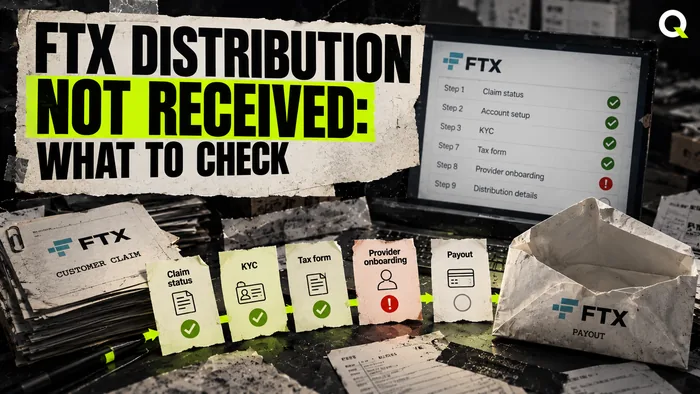
An adjudicated claim alone is not payment-ready. The May 27, 2026 notice required positive adjudication, KYC/AML, no exclusions, an acceptable tax form and a selected and set-up payment option. Retail customers could choose BitGo or Payoneer, institutions BitGo or wires. Check your current portal instructions for availability. [8]
The Bahamas process also requires tax information under the U.S. debtors' plan and the Global Settlement Agreement. Depending on tax status, this is provided on Form W-9 or an appropriate Form W-8. Providing a form does not automatically make a creditor a U.S. tax resident. [7, PDF pp. 3-4]
A record date determines when the eligibility requirements must be met. The May notice named June 16, 2026 as the record date and expected distributions to begin on July 31, 2026. Those dates are in the past and illustrate the mechanism. Catch-up payments were also planned for eligible customers who completed the requirements after the previous record date. When checked on November 12, 2026, the May 27 notice was still the latest update on PwC's case website; check later liquidator notices for new dates and your own readiness. [8] [1]
Country restrictions are a separate issue
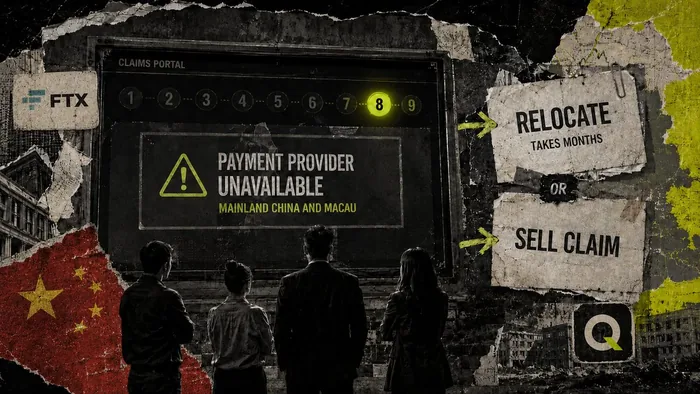
Short answer: PwC keeps its own list of 46 jurisdictions where it cannot pay for now; unlike the U.S. list, it still includes all of Ukraine and Rwanda.
PwC maintains its own Potentially Restricted Foreign Jurisdictions list. When checked on November 12, 2026, it contained 46 countries and territories, including Russia, Belarus, Ukraine, Moldova, China and Macau. Hong Kong was not listed. PwC says the jurisdictions continue to be assessed and gives no timeline or likely outcome. [9]
The U.S. list of jurisdictions whose residents cannot select a payout provider (Distribution Service Provider, or DSP) has 43 entries as of October 30, 2026. Compared with it, PwC's list also includes Rwanda, Pakistan and Zimbabwe, and it lists all of Ukraine, while the U.S. list keeps only five regions of Ukraine (Crimea, Donetsk, Luhansk, Zaporizhzhia and Kherson). See countries without an FTX payout provider. [14] [9]
Since October 30, 2026, according to the FTX list, creditors in Ukraine, except in these five regions, can select a payout provider in the FTX Customer Claims Portal. The provider makes the final onboarding decision. This applies to the U.S. process only: for Bahamas claims, Ukraine remains on PwC's list.
PwC says customers in the listed jurisdictions cannot currently be paid; its May 27, 2026 notice says this is pending review of the legality of making payments there. Assessment continues without a stated timetable or likely outcome, and the liquidators will update affected customers when they have more information.
Qredax paraphrase; short original excerpt: "unable to make payments" [9] PwC restricted-jurisdictions page, short excerpt.
This is a payment pause pending assessment, not by itself a claim rejection, but the liquidators give no end date. A listed country is not the same as an individual sanctions designation. Changing payout providers or selling a claim does not guarantee that every restriction disappears.
Can you simply wait for a status to change?
Short answer: Only after you answer every request that has a deadline: an unanswered KYC or tax request can make the claim a DM Excess Claim with no Bahamas payments.
First check for requests with deadlines. The second interim report discusses DM Excess Claims: failure to provide requested KYC or tax information within the stated time after due notice can lead to this classification, with no entitlement to payments in the Bahamas process. Unclaimed Distributions are a separate risk, including where required payment details are not provided. [10, PDF p. 13]
A slow review does not automatically mean the right to payment has been lost. If a rejection decision is issued, PwC's FAQ describes an appeal to the Supreme Court of The Bahamas within the applicable statutory time frame. Do not substitute dates from someone else's notice or the U.S. case. [2]
Can you sell a Bahamas FTX claim?
Short answer: Yes, through PwC's Transfer Notice Form; both parties pass KYC, and the transfer counts for a distribution only once the liquidators confirm it in writing before the record date.
The seller or buyer first requests a Transfer Notice Form with a unique tracking ID from FTX Digital. Both parties complete and sign it, and it is sent from the original owner's email address. The team then processes the transfer and updates the portal. [5, PDF p. 3]
A form sent from another email address is not accepted without supporting evidence, and evidence does not by itself guarantee acceptance. The buyer must notify the Contact Centre of the intended purchase and, after processing, create its own claim for the transferred account in the portal. [5]
A sale does not remove KYC: no distributions are made until both seller and buyer complete it. Payments already made stay with the seller. The buyer receives all future payments, including applicable post-petition interest and Supplemental Remission Fund amounts. The guide describes full ownership transfers only; it does not describe selling part of a claim. [5, PDF pp. 3-4]
Before purchase, the guide makes the buyer responsible for checking that the claim has not already been paid or transferred, and it strongly encourages buying claims that are already KYC-approved. Claims that have been paid or transferred, and claims outside the FTX Digital Markets liquidation, are excluded from the procedure. Earlier partial distributions do not by themselves prevent a transfer of future payments: the guide expressly covers that case. If there has been an earlier transfer or the status is unclear, confirm with the FTX Digital team that a new purchase is possible. [5, PDF pp. 3-4]
For a buyer to receive a particular distribution, the May 27, 2026 notice required the liquidators' written confirmation of the transfer before the record date. [8]
A transfer without the liquidators' written confirmation before the record date is not recognized for that distribution. Payment goes to the beneficiary on the liquidators' schedules at that date.
Qredax paraphrase; short original excerpt: "confirmed in writing" [8] PwC notice of May 27, 2026, short excerpt.
The confirmation date matters, not just the contract date. Without confirmation by the cutoff, payment goes to the recorded beneficiary, usually the seller.
Qredax pays the seller for a Bahamas claim after the liquidators confirm the claim transfer in writing.
Separate the adjudicated principal, amounts already received and remaining rights. A price expressed as a percentage of original principal differs from a percentage of the unpaid balance. Document the price, payment timing and what happens if transfer confirmation is delayed.
What to prepare for an individual assessment
Start with the process, any known code or reference, the approximate amount, prior payments and the issue you face. An adjudication notice, status information and payment history can be shared through an agreed channel. This is a practical list for discussing a sale, not a universal PwC document requirement.
Do not share seed phrases with anyone. Check messages against PwC's official contact list. The real liquidators' portal is digitalmarketsclaim.pwc.com; fraudulent copies exist. [12] [8] [13]
This guide concerns FTX.com customer claims in the Bahamas process. Other group companies and non-customer claims may follow different rules. Check your own portal and notices for applicable steps and deadlines.
Frequently asked questions
Have an FTX Bahamas / PwC claim?
Request an individual assessment from Qredax. Provide your Customer Code or PwC reference if you know it. If you do not know the number or the process, describe your situation. Whether a deal is possible, and on what terms, depends on the review.
Sell your FTX claim